
- Millennials and Gen Z are more open to banks’ AI services than older generations.
- 60 percent of 18- to 34-year-olds value round-the-clock availability. Young people also appreciate the speed of banks’ AI services and the overview they provide of their finances.
- 36 percent of respondents in this age group say they have experienced difficulties making an installment payment, which is 6 percentage points higher than the population average.
A striking finding from the EOS Banking AI Barometer is that millennials and Gen Z are more open to AI services than any previous generation. However, confidence in the use of modern technology does not seem to protect them from debt-related stress. Younger respondents experience payment difficulties more often than older people.
For the representative EOS Banking AI Barometer survey, 4,400 people in eleven European countries were asked about their views on artificial intelligence in banking communication.
What benefits do young people see in the AI services of banks?
Detailed findings show that 18- to 34-year-olds are more open to AI services than 51- to 65-year-olds across nearly all scenarios. Young people are particularly positive about round-the-clock service from their bank’s AI offerings, with 60 percent valuing this benefit. Among older respondents, the figure is just 47 percent. In addition, 28 percent of younger respondents already use their bank’s AI chatbots, compared with only 13 percent of older respondents.
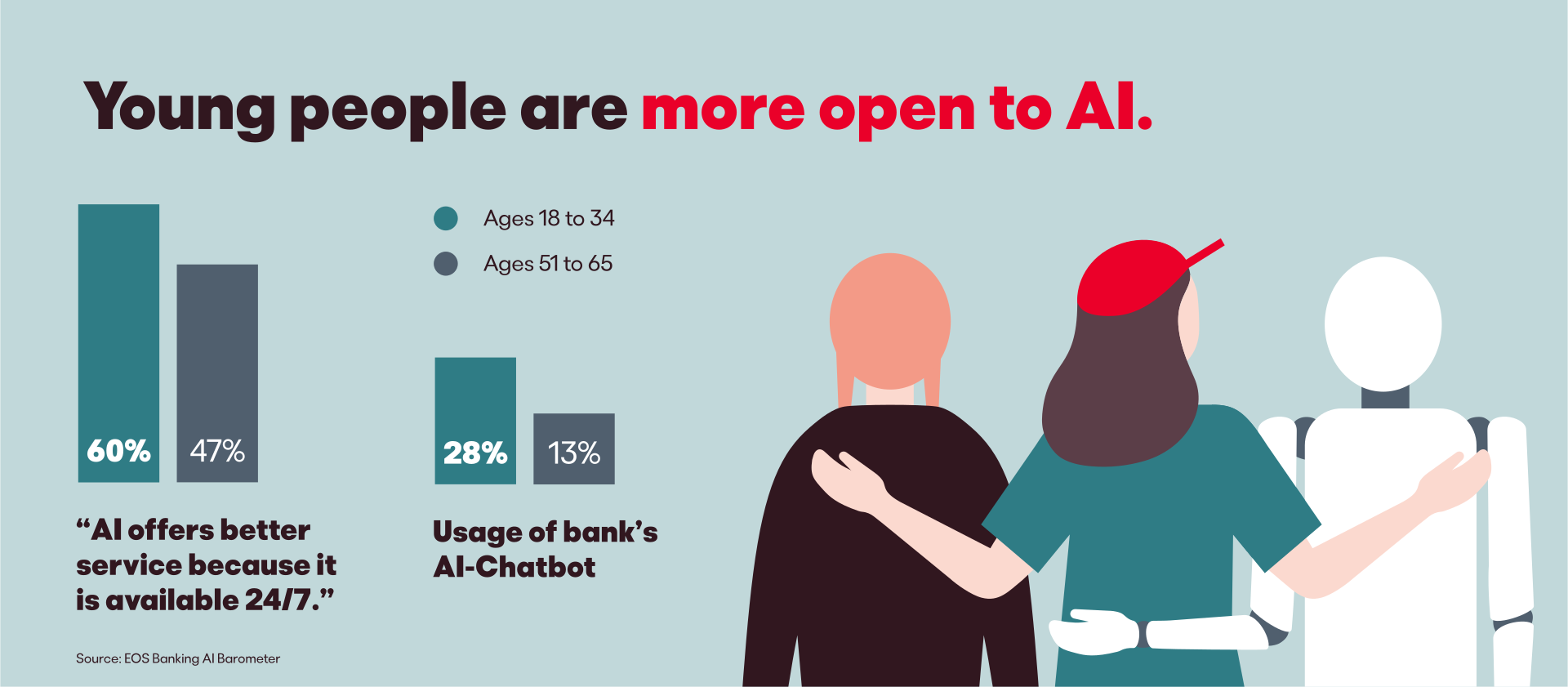
Younger people also value the speed of AI solutions: 59 percent see it as a benefit, compared with 48 percent of older respondents. In addition, 41 percent of 18- to 34-year-olds appreciate the overview of their finances that AI provides. Among 51- to 65-year-olds, only 29 percent consider this an advantage. Overall, 50 percent of older respondents want to communicate exclusively with a bank employee. Among younger people, the figure is just 38 percent.
Tech-savvy but under financial pressure: What challenges do young people face?
According to the EOS Banking AI Barometer, 18- to 34-year-olds report financial difficulties more often: 36 percent have experienced payment difficulties at least once. The Deloitte Gen Z and Millennial Survey 2025 documents a similar trend. Just under half of Gen Z feel financially insecure, and more than one-third struggle to cover their fixed costs.
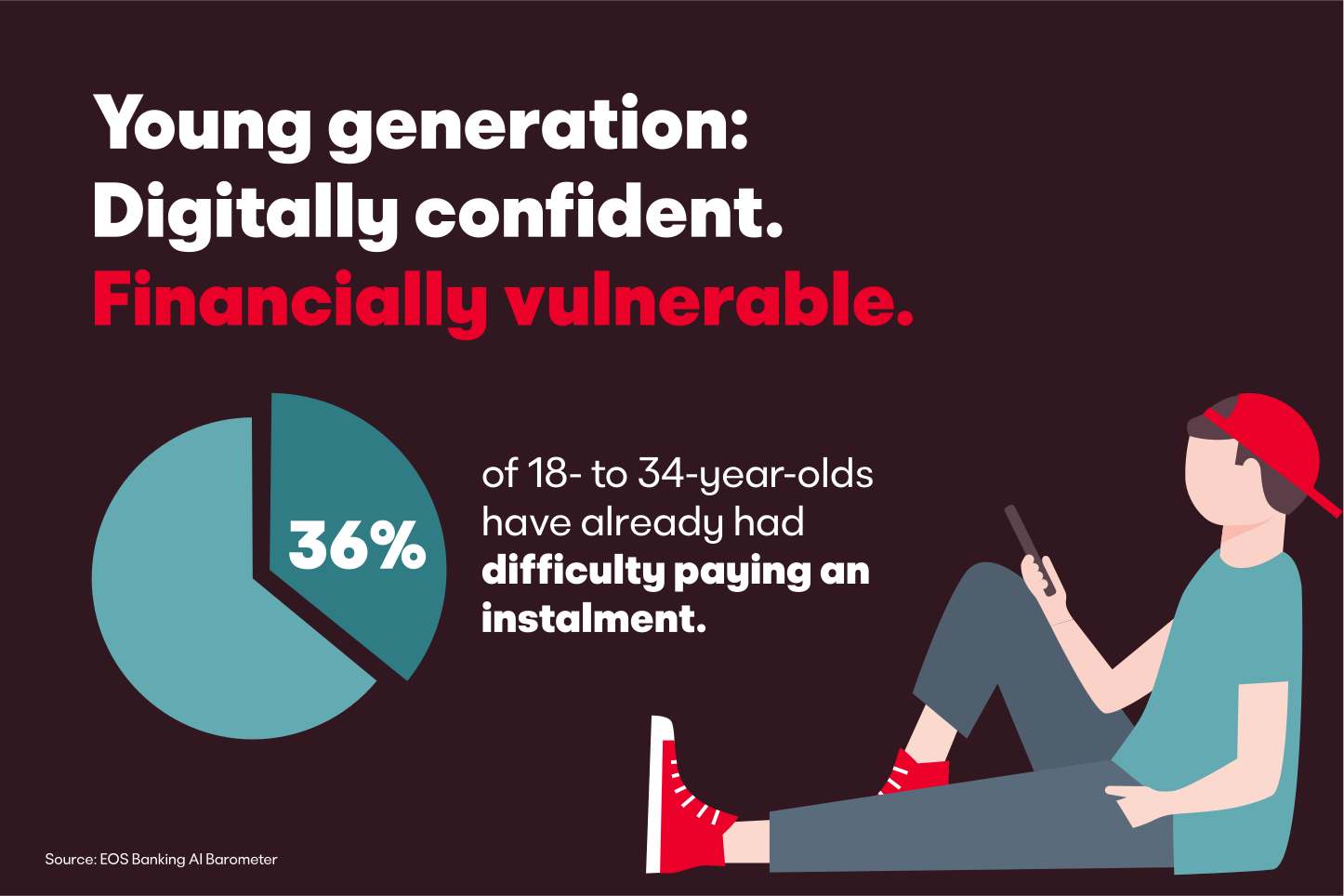

Using AI is second nature to younger people. At the same time, 36 percent of 18- to 34-year-olds report payment difficulties, compared with 30 percent of the population overall. This generation needs AI tools that understand their financial reality and meet them where they are.
Since 2019, the nonprofit finlit foundation has been committed to promoting financial literacy among children and young people. It sees financial literacy as a foundation for self-determination, participation in society, and equal opportunity. To support this goal, finlit develops free, advertising-free educational resources for schools and teachers, including ManoMoneta for grades 3 to 6 and OhMoney for grades 7 to 10. The aim is to help young people develop a responsible approach to money in a practical, age-appropriate way—regardless of their background.
Why is AI gaining traction in the sensitive area of debt?
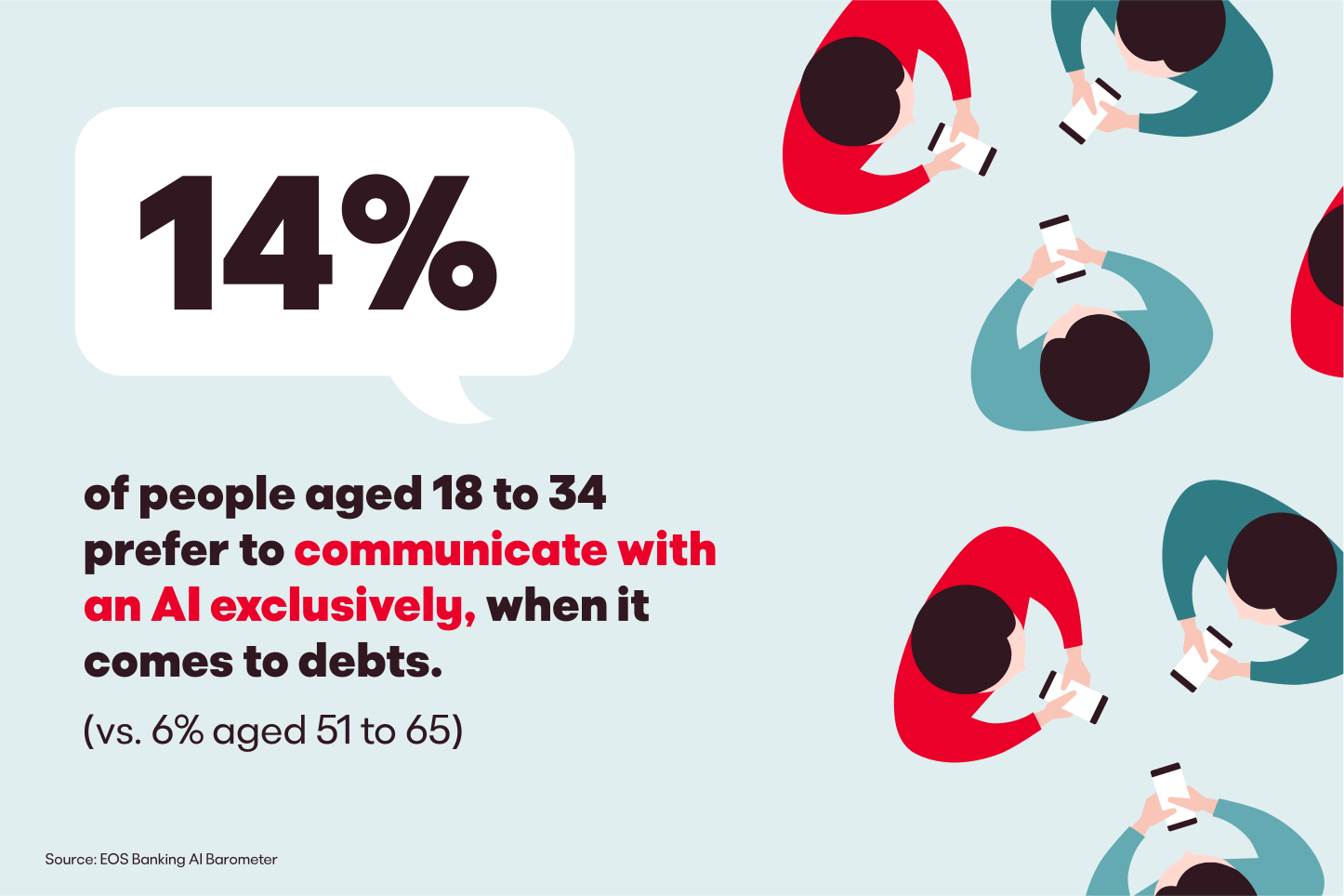
When young people are experiencing payment difficulties or debt, they appear to value the anonymity of accessing banking services through AI. In such situations, 14 percent of 18- to 34-year-olds would even prefer to communicate exclusively with AI, compared with just 8 percent of the population overall. The figure is even higher among 18- to 24-year-olds, at 17 percent.
How can banks and financial service providers offer support?
Digitally confident but also facing financial pressure at an earlier age: The figures paint a picture of a generation redefining its relationship with money and technology.
“For years, we have seen that many people lack basic financial literacy,” says Jana Titov. “Yet this knowledge is essential for understanding and assessing AI-generated answers and financial services. Financial education must therefore start early, become firmly embedded in society, and remain independent of commercial interests.”
The findings highlight two key challenges for banks, financial service providers, and debt collection companies. They need to develop digital services tailored to the expectations of an AI-savvy generation. At the same time, they can help strengthen financial literacy. Tomorrow’s customers need more than smart digital solutions. They also need the knowledge and guidance to navigate an increasingly complex financial world.
Gen Z and millennials: more confident with AI than with money?
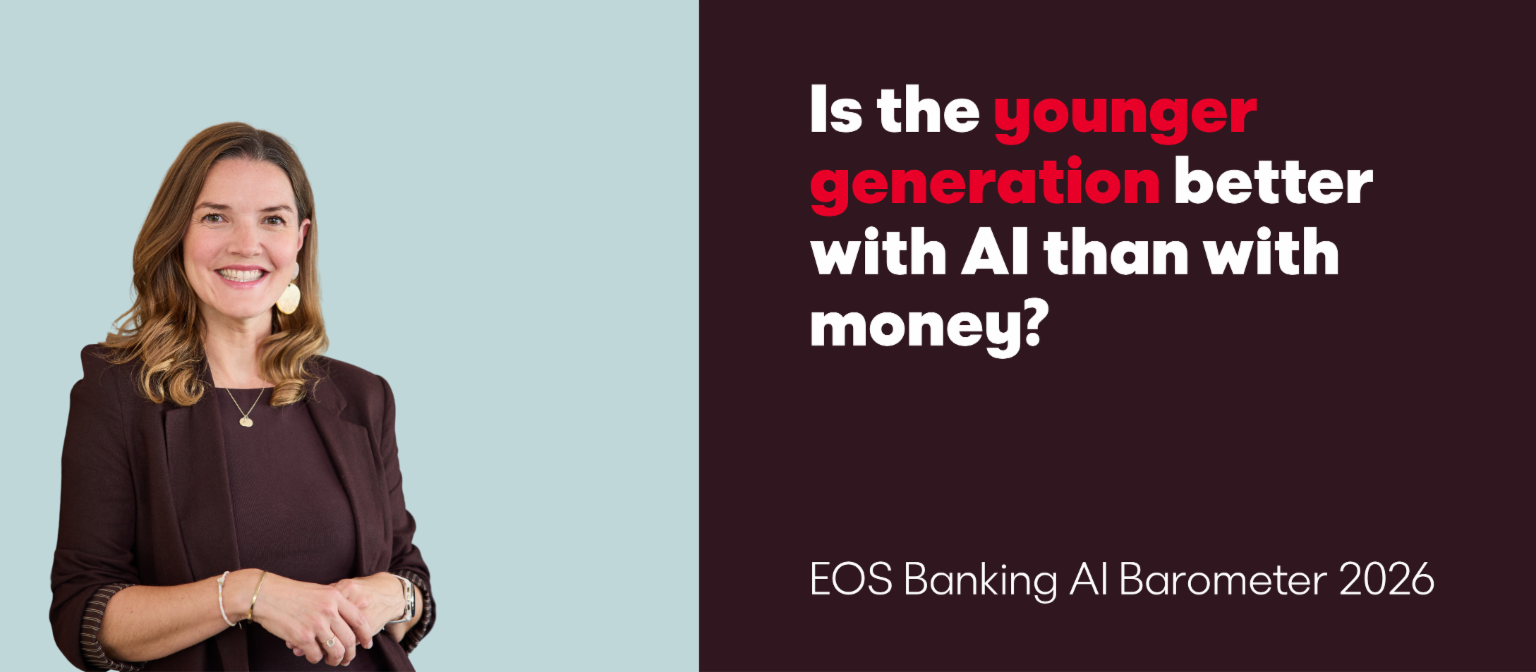
Jana Titov, Managing Director of the nonprofit finlit foundation, explains the key findings of the latest EOS Banking AI Barometer and highlights the urgent need for better financial education.
For the EOS Banking AI Barometer study – How Europe really feels about AI in banking – 4,400 people in eleven European countries (Bulgaria, Croatia, France, Germany, Greece, Poland, Portugal, Romania, Slovenia, Spain and Switzerland, 400 respondents per country) were surveyed about their attitudes towards artificial intelligence in bank communications. The data was collected in July 2026, and the target group consisted of bank customers aged 18 to 65. The study was conducted online and was representative of the population.
Would you like to learn more about the latest EOS study? Please feel free to contact us.

Carina Bonde
Corporate Communications & Marketing
Phone: + 49 173 2979331
Explore more from EOS