Nearly one in three Slovaks is removing gifts from their budget

More than half find being unable to pay bills and meet financial obligations on time highly stressful

Christmas will put many Slovak households to the test. As early as spring, 31.6 percent of people were planning to remove gifts and non-essential spending from their budgets. At the same time, the proportion of people who find being unable to make a payment on time extremely stressful has risen sharply, reaching 31.2 percent.

Ahead of Black Friday, consumers are also cutting out typical sale purchases

These findings come from a survey commissioned by debt collection company EOS KSI Slovensko and conducted among a representative sample of 1,000 respondents. Asked “Which household expenses do you plan to eliminate entirely from your budget this year, or have you already eliminated?”, 31.6 percent of respondents selected gifts and non-essential spending.

Almost as many respondents cited electronics and major household purchases (30.9%) and new clothing and fashion purchases (30.6%) — precisely the categories most commonly purchased during Black Friday. A similar proportion, 31.5%, are cutting out café visits and small treats, including impulse purchases. Only one in five respondents (20.1%) had no plans to eliminate any spending categories. 

(Respondents could select more than one answer, so the total exceeds 100 percent.)

People aged 50 to 65 (39.1%) and those over 65 (38.2%) are the most likely to eliminate gifts and non-essential spending. A similar pattern applies to electronics and major purchases (34.8% and 36.1%, respectively, compared with 27.1% among those aged 18 to 33). People over 50 are therefore making more pronounced cuts across several spending categories at once.

“A discount only represents a saving if we are buying something we would have bought anyway and already have the money to pay for it. We therefore recommend setting a Christmas budget before Black Friday and taking into account January payments as well — rent, utilities, insurance premiums and loan repayments,” cautions Peter Dvornák, Director of EOS KSI Slovensko.
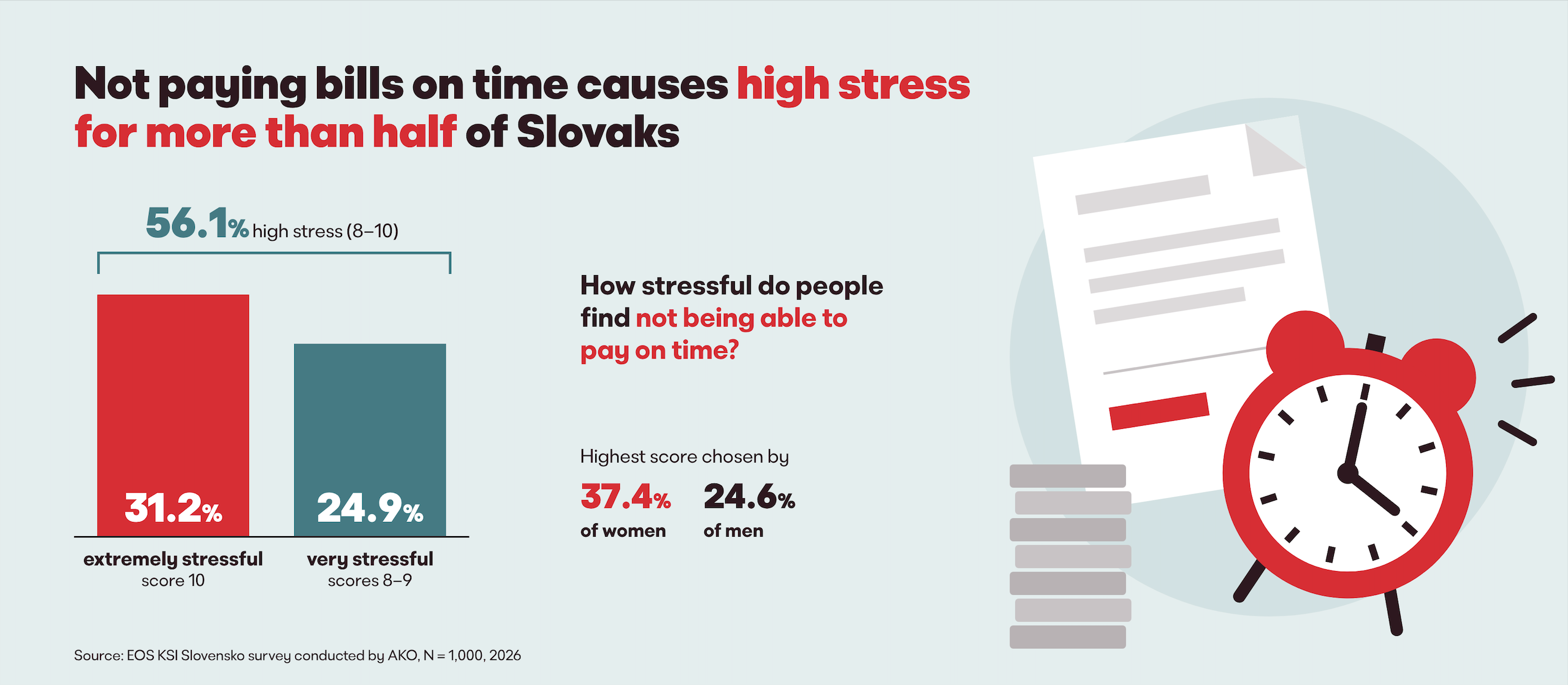
Nearly one in three people finds being unable to pay on time extremely stressful

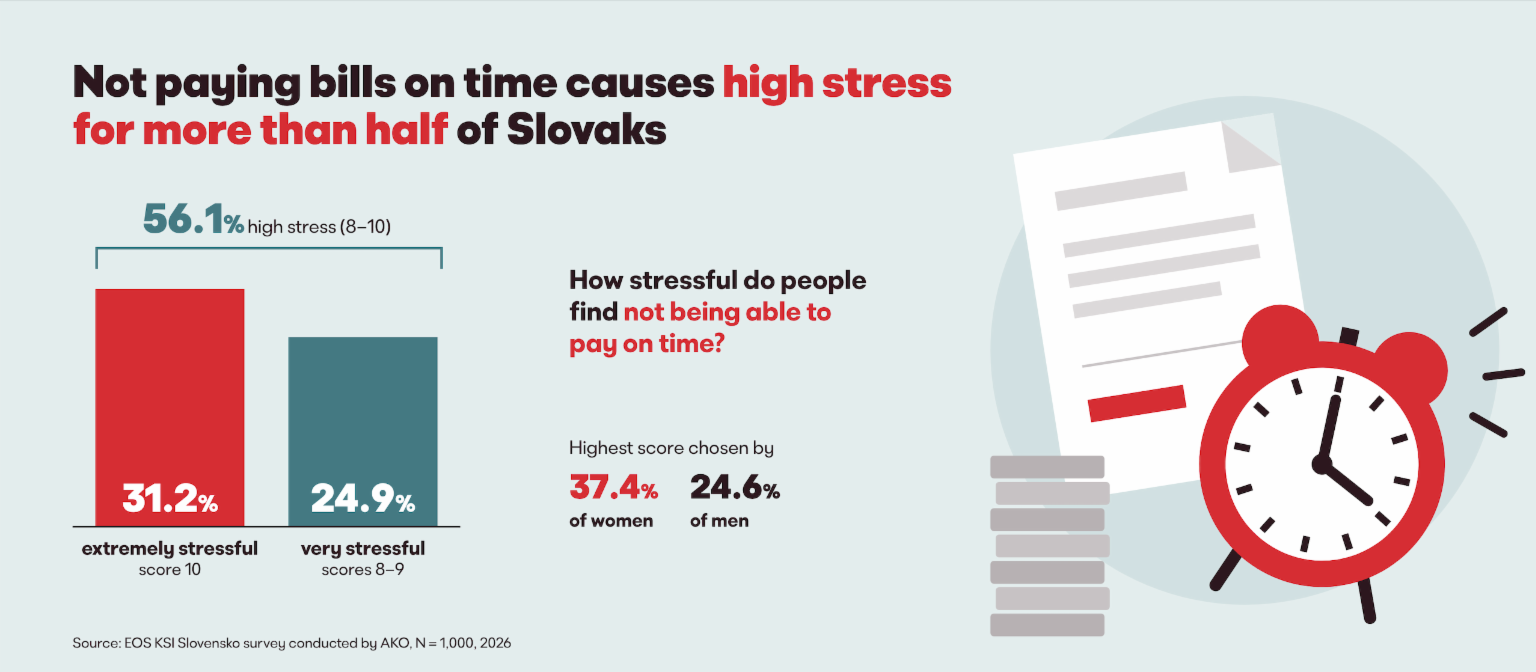
A second finding from the EOS KSI Slovensko survey highlights the extent to which people experience financial pressure. Asked “On a scale of 1 to 10, how stressful is it for you personally to be unable to make a payment on time?”, 31.2 percent of respondents selected the highest rating of 10 — extremely stressful. 

In total, 56.1 percent of respondents report high levels of stress (ratings of 8 to 10). Women were more likely to select the highest rating (37.4%) than men (24.6%).

“Stress associated with missed payments is not solely linked to whether someone has debt. The findings show how much of a burden being unable to make payments on time places on people. Higher stress levels among women may also be linked to the fact that they more often handle day-to-day household payments and shopping.” explains Václav Hřích, Director of research agency AKO, which conducted the survey.

How to manage Christmas shopping without financial stress in January

Being financially responsible does not mean giving up Christmas; it means knowing in advance how much you can afford to spend. A few simple steps can help in the run-up to the holidays, advises Peter Čanda, Manager at EOS KSI Slovensko:

  • Set a Christmas spending limit before Black Friday and stick to it. A gift list will help you resist impulse purchases.
  • Plan for January first. Set aside money for rent, utilities, insurance premiums and loan repayments before you start planning gifts.
  • Treat instalment purchases and deferred payments with the same care as a loan. Even a small monthly instalment will place a burden on your budget for months to come.
  • Do not use money earmarked for regular payments to buy gifts. The resulting shortfall could lead to overdue payments after the holidays.
  • Talk about money as a family. Agree in advance how much to spend on gifts. A gift does not have to be expensive to be meaningful.
  • Do not put off getting in touch. If you know you will be unable to make a payment, get in touch before the due date rather than waiting for a reminder.

“People are often afraid to answer the phone or reach out themselves. There is no need to feel that way. We understand the situations they find themselves in, and early contact gives us the opportunity to explore the next steps together. A financially responsible Christmas is one where the joy of giving is not replaced by the stress of unpaid bills in January,” concludes Peter Čanda.

The survey was conducted for EOS KSI Slovensko by research agency AKO using the CAWI method among a representative sample of 1,000 respondents in Q2 2026.

Print